Offshore Wind Farm Efficiency Through Wake Dynamics
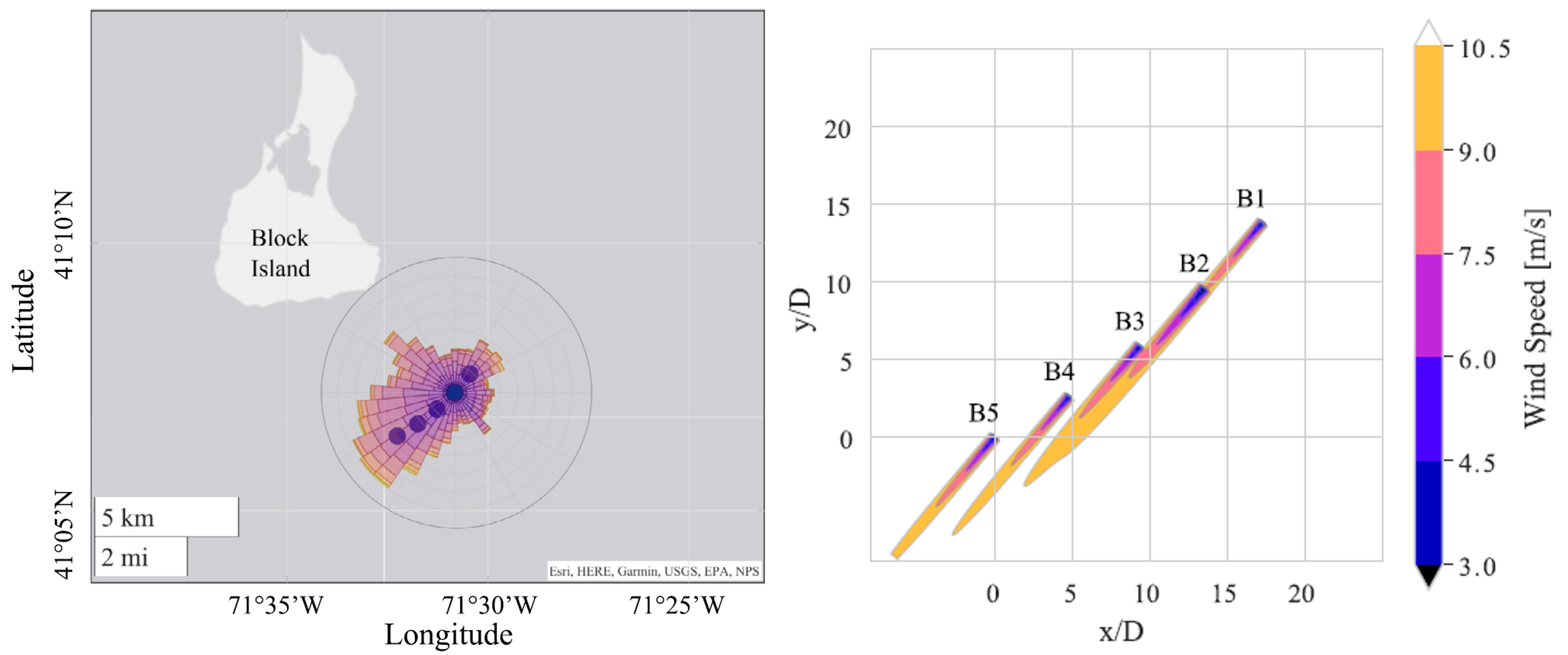
Wake interactions in offshore wind farms, caused by aerodynamic disturbances between turbines, reduce energy efficiency by decreasing power output and increasing mechanical stress on downstream turbines. Understanding and mitigating these effects is essential for improving the sustainability and performance of modern wind energy systems. This study conducts a sensitivity analysis of influential operational and environmental parameters that shape wake behavior. Factors such as turbulence intensity, yaw misalignment, and turbine operating conditions are examined using advanced modeling tools. These analyses help clarify how wake formation and recovery affect power losses within clustered turbine arrays. As offshore wind farms expand in scale and density, addressing wake induced inefficiencies becomes increasingly important. The study integrates experimental observations with modeling frameworks to calibrate predictive tools that better reflect real world conditions. Seasonal variations in turbulence and their influence on wake recovery are also evaluated, offering insight into temporal changes in farm performance. These findings help guide turbine layout decisions and operational strategies that minimize energy losses and enhance overall wind farm reliability. (Journal Paper)