Seismic Performance of Integral and Semi-Integral Bridges
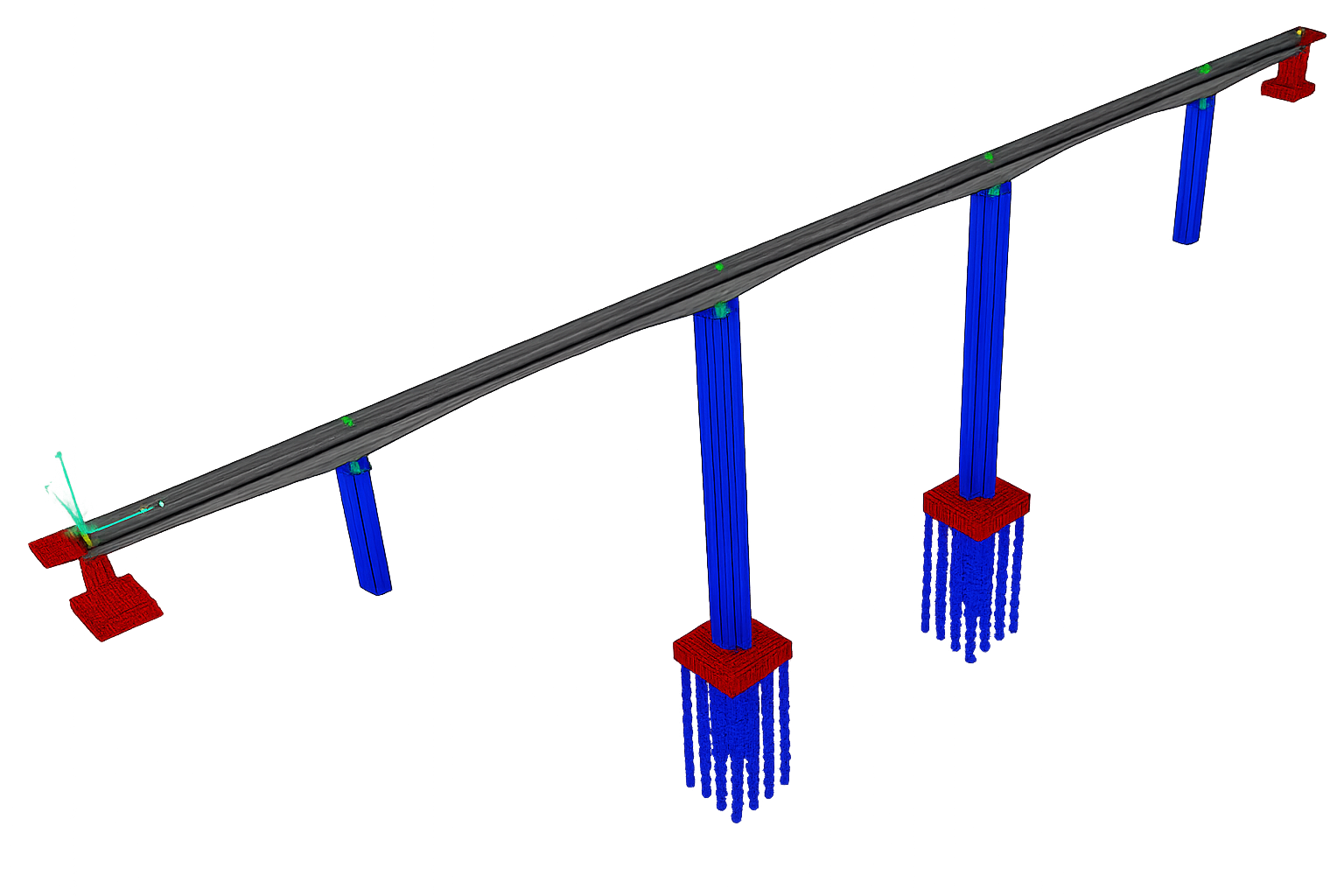
Bridges are essential elements of transportation networks, but their performance under seismic and thermal conditions poses significant engineering challenges. This study examines the behavior of integral, semi-integral, and conventional bridges under such loads, focusing on their structural responses and soil-structure interactions. Integral bridges, with their continuous connections between the deck and abutments, enhance seismic resilience and lower maintenance by eliminating expansion joints and bearings. Semi-integral bridges, using limited bearings, provide a compromise between flexibility and durability. Conventional bridges, though common, often experience greater displacements and maintenance due to their segmented design. The research explores how soil-backfill interactions and connection types affect bridge performance under these conditions. Advanced finite element modeling and time-history analysis show that integral and semi-integral bridges perform better during seismic events due to their frame action and soil interaction. The study also examines thermal loads on abutment deformations and backfill pressure, highlighting the superior stress distribution of semi-integral systems. These findings aid in optimizing bridge designs for improved resilience and sustainability by addressing interactions between structural components and environmental forces. (Journal Paper, Conference Paper 1, Conference Paper 2)